The hybrid inverter is the most popular inverter model by Crown Micro Global, offering a backup solution for your home with the help of a battery and providing a continuous power supply, which plays a crucial role in delivering an efficient and innovative energy solution.
The health of the battery plays a crucial role; the charging and discharging processes of the battery significantly impact the inverter systems, and most battery faults are considered inverter faults. Crown solar inverters are easy to integrate with any battery and solar panel, so you can’t avoid considering battery health when running a solar. system
In this blog, you will explore how the inverter works and how charging and discharging affect the inverter.
Hybrid Inverter System
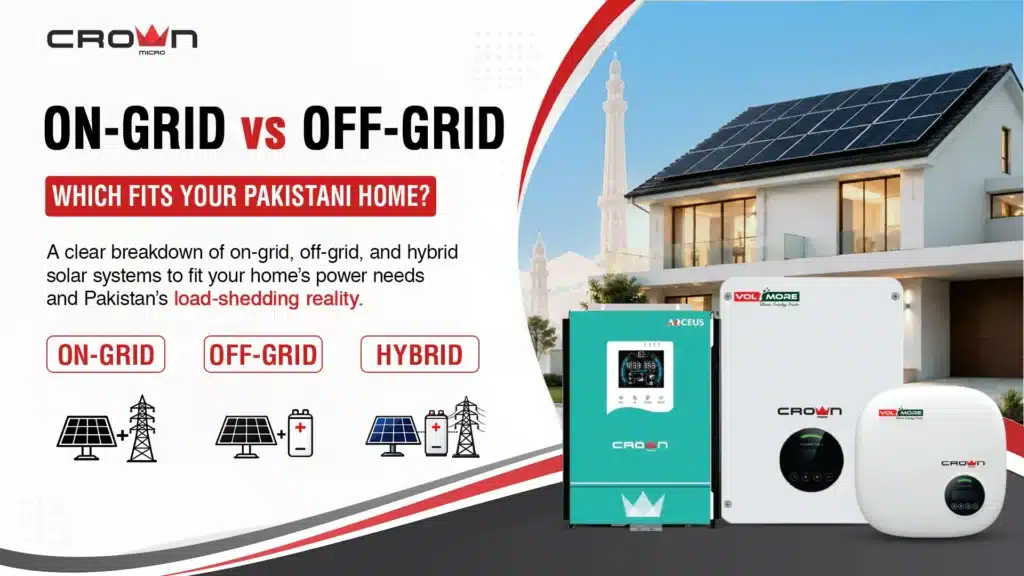
A hybrid inverter provides both grid-tied and off grid inverter functions simultaneously during the day by using direct solar panel energy. It powers business and home appliances and can also supply energy at night using batteries to ensure reliable power. It is designed as an integrated model with solar, grid, and battery capabilities, similar to conventional inverters, but with innovative features that eliminate the need for manual selection of when to store excess energy in the battery. Additionally, it offers net metering functionality for greater savings and lower bills.
This flexibility makes an inverter a versatile choice. Whether you’re a homeowner or a business owner frustrated by power outages that impact your daily tasks, installing an inverter with a battery can provide reliable power with the help of a Hybrid Solar inverter Lahore.
Role of Batteries in a Hybrid Inverter
Storing energy in backup batteries plays an important role. Without installing batteries, you use your inverter as a grid source during peak hours. However, when you install a battery with the inverter, it becomes a power backup solution. The amount of energy stored depends on the size of the inverter, which determines the amount of backup power available during outages and also helps manage your load.
Energy from solar panels is inconsistent, varying with sunlight intensity and producing either high or low power. Without batteries, even your hybrid inverter may struggle to manage the load when you suddenly operate a water motor or other high-demand appliances. It can cause the inverter to shut down with a buzzer sound, emphasizing the importance of batteries in improving your inverter’s efficiency, reliability, and durability. Here are some functions of a battery with an inverter: store surplus solar energy for later use.
- Provide backup power during outages
- Reduce dependency on the grid
- Optimize energy bills by shifting usage to off-peak hours
Without batteries, your Crown Solar system functions only as a simple grid-tied system, and it does not offer energy independence. Charging the battery affects the inverter. If the battery is new, it provides more backup power compared to an old one. It also influences the solar inverter price in Pakistan, making them either more affordable or more expensive.
The Battery Charging Process in Hybrid Inverters
To install a battery with an inverter, you need a professional because it involves more than just charging the battery with a plug-and-play approach. It also requires intelligent steps, such as managing energy, ensuring safety, and prolonging battery life.
Energy Generation Stage
Without generating energy from solar panels, you can’t store the energy in the battery, nor can you run the inverter to offer uninterrupted power. Therefore, the size of the solar panel and the number of panels also affect the solar panel price in Lahore.
With the correct number of solar panels according to your load, you generate DC power, and the right inverter, like Crown Micro, converts it into AC to smoothly run appliances.
Suppose you install the maximum number of panels compared to your load capacity. In that case, the panels will easily produce excess energy that can run your appliances, and the leftover power is directed directly to your battery for storage.
Multi-Stage Charging Process
Most hybrid inverters by Crown, including advanced models, employ a multi-stage charging process to protect battery health, comprising bulk charging, absorption, and float charging stages.
During bulk charging, the battery receives 70-80% of the current for quick charging from the inverter. To reach full capacity, absorption charging slows down the current to maintain the battery’s health and longevity.
Float charging is available in advanced inverters, where the inverter maintains the battery’s health by charging it with minimal current.
Smart Charging from the Grid
When solar energy is insufficient, the inverter offers smart charging. Especially on cloudy days and nights, the inverter draws electricity from the grid to charge the battery, which increases your bills, similar to using a UPS. Still, this type of charging is minimal in uncertain weather conditions. Some Crown inverters allow you to schedule grid charging during low-cost, off-peak hours, which can help save on high bills.
Battery Discharging Process in Hybrid Inverters
To power your appliances when the battery offers power, known as Discharging, for running smoothly for the maximum time, you need to take care of the battery by:
- Managing your loads by switching off the other unnecessary appliances will enhance the backup time.
- Stored DC in the battery is converted to AC with the help of an inverter, and the battery serves as the primary source on cloudy days, in the evening, and at night.
- As an emergency backup in the event of a blackout, your battery also supports the panel, ensuring an uninterrupted power supply.
Battery Types in Hybrid Inverter Systems
Not all batteries are compatible with hybrid inverters; however, you can still use them. Easily connect any size and brand of battery to supply power. The lifespan of a battery depends on its quality, and the backup time varies with the battery size.
The most common types of batteries are:
- A lead-acid battery is an Affordable option, but it requires regular maintenance and offers a short lifespan, which increases the inverter price, making it more expensive.
- Lithium-ion batteries are costly but highly efficient, lightweight, and long-lasting, with a lifespan of up to 10 years, requiring no replacement or maintenance.
- Gel batteries are a type of lead-acid battery that offers less maintenance, better performance, and typically last around three years; however, it is necessary to check the water levels regularly.
Battery Charging and Discharging
There are many benefits of installing a hybrid inverter. It offers the best results when it comes to charging and discharging in Hybrid Inverters.
Battery advantage
Here are some benefits of battery charging with Crown Micro inverter:
- Energy Independence
- Cost Savings
- Backup Power
- Better Efficiency
- Eco-Friendly
With an inverter, your battery provides a cost-effective solution that offers complete power backup.
Challenges With Battery
Installing a battery with the inverter also offers some challenges.
- Battery Degradation with Frequent charging and discharging
- High Initial Cost: Batteries, especially lithium-ion
- Efficiency Losses: Conversion from DC to AC
- Maintenance: Lead-acid batteries require regular maintenance to ensure safety.
Tips For Improving Battery Life
- Avoid deep discharges.
- Use recommended battery types with the inverter.
- Install in a proper ventilation area to prevent overheating.
- Create a schedule to charge the battery.
- Regularly monitor performance.
With Hybrid Crown Micro Global, there’s no need to worry about the battery type as it’s easily compatible with any battery. Keep an eye on the display for updates related to charging and discharging to ensure smooth power for your device’s appliances.
Frequently Asked Questions (FAQs)
Can a hybrid inverter work without a battery?
Yes, because it offers both on-grid and off-grid functionality, it can act as an on-grid inverter without a battery, drawing support from the local grid instead of relying on a battery.
Do hybrid inverters charge batteries from the grid?
Yes, when the weather is cloudy, you can allow the grid to charge your battery as a backup power source; schedule this during off-peak hours to save on your bills.
How do I know if my battery is discharging correctly?
You can easily check the health and operating status of your battery via the monitoring app or display panel.
Final Words:
Finally, you understand well the role of a battery, especially in a hybrid inverter, and how charging and discharging affect the battery’s lifespan. You can extend your battery’s life by using precautions such as avoiding frequent charging and discharging, and save on bills by scheduling battery charges from the local grid during off-peak hours. With Crown Micro Global, you can save costs by installing any type of battery, whether gel or lithium. Install your Crown hybrid inverter and utilize the battery effectively for efficient power management.